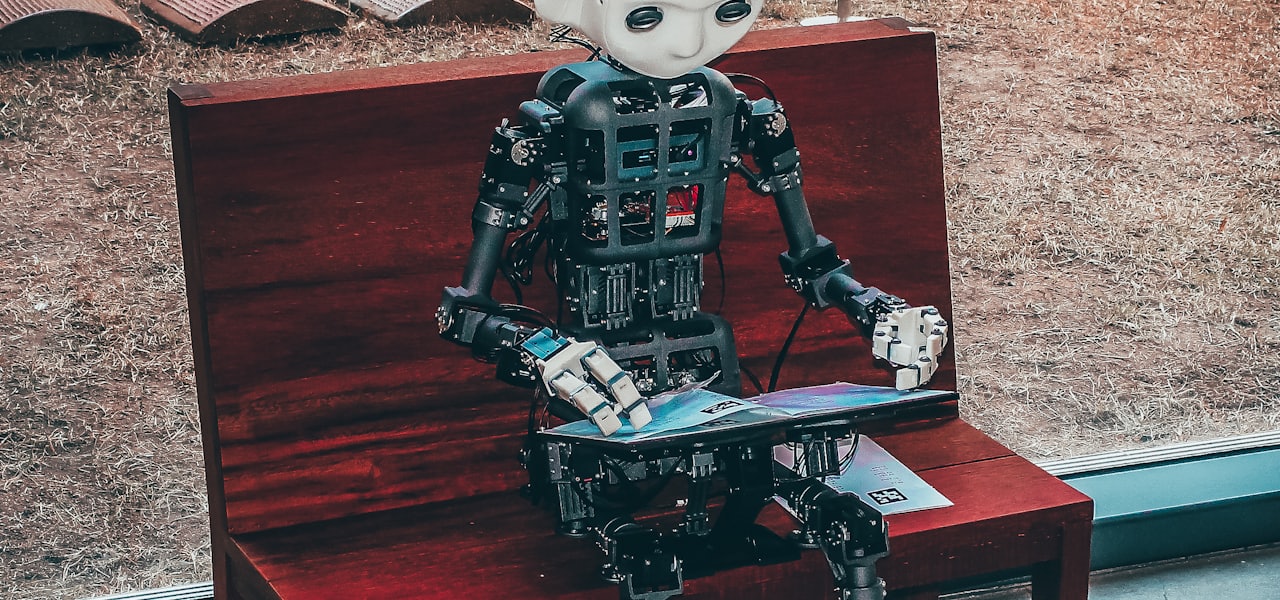
The machine translation of sign languages has been possible, albeit in a limited fashion, since 1977. When a research project successfully matched English letters from a keyboard to ASL manual alphabet letters which were simulated on a robotic hand. These technologies translate signed languages into written or spoken language, and written or spoken language to sign language, without the use of a human interpreter. Sign languages possess different phonological features than spoken languages, which has created obstacles for developers. Developers use computer vision and machine learning to recognize specific phonological parameters and epentheses unique to sign languages, and speech recognition and natural language processing allow interactive communication between hearing and deaf people. == Limitations == Sign language translation technologies are limited in the same way as spoken language translation. None can translate with 100% accuracy. In fact, sign language translation technologies are far behind their spoken language counterparts. This is, in no trivial way, due to the fact that signed languages have multiple articulators. Where spoken languages are articulated through the vocal tract, signed languages are articulated through the hands, arms, head, shoulders, torso, and parts of the face. This multi-channel articulation makes translating sign languages very difficult. An additional challenge for sign language MT is the fact that there is no formal written format for signed languages. There are notations systems but no writing system has been adopted widely enough, by the international Deaf community, that it could be considered the 'written form' of a given sign language. Sign Languages then are recorded in various video formats. There is no gold standard parallel corpus that is large enough for SMT, for example. == History == The history of automatic sign language translation started with the development of hardware such as finger-spelling robotic hands. In 1977, a finger-spelling hand project called RALPH (short for "Robotic Alphabet") created a robotic hand that can translate alphabets into finger-spellings. Later, the use of gloves with motion sensors became the mainstream, and some projects such as the CyberGlove and VPL Data Glove were born. The wearable hardware made it possible to capture the signers' hand shapes and movements with the help of the computer software. However, with the development of computer vision, wearable devices were replaced by cameras due to their efficiency and fewer physical restrictions on signers. To process the data collected through the devices, researchers implemented neural networks such as the Stuttgart Neural Network Simulator for pattern recognition in projects such as the CyberGlove. Researchers also use many other approaches for sign recognition. For example, Hidden Markov Models are used to analyze data statistically, and GRASP and other machine learning programs use training sets to improve the accuracy of sign recognition. Fusion of non-wearable technologies such as cameras and Leap Motion controllers have shown to increase the ability of automatic sign language recognition and translation software. == Technologies == === VISICAST === http://www.visicast.cmp.uea.ac.uk/Visicast_index.html === eSIGN project === http://www.visicast.cmp.uea.ac.uk/eSIGN/index.html === The American Sign Language Avatar Project at DePaul University === http://asl.cs.depaul.edu/ === Spanish to LSE === López-Ludeña, Verónica; San-Segundo, Rubén; González, Carlos; López, Juan Carlos; Pardo, José M. (2012), Methodology for developing a Speech into Sign Language Translation System in a New Semantic Domain (PDF), CiteSeerX 10.1.1.1065.5265, S2CID 2724186 === SignAloud === SignAloud is a technology that incorporates a pair of gloves made by a group of students at University of Washington that transliterate American Sign Language (ASL) into English. In February 2015 Thomas Pryor, a hearing student from the University of Washington, created the first prototype for this device at Hack Arizona, a hackathon at the University of Arizona. Pryor continued to develop the invention and in October 2015, Pryor brought Navid Azodi onto the SignAloud project for marketing and help with public relations. Azodi has a rich background and involvement in business administration, while Pryor has a wealth of experience in engineering. In May 2016, the duo told NPR that they are working more closely with people who use ASL so that they can better understand their audience and tailor their product to the needs of these people rather than the assumed needs. However, no further versions have been released since then. The invention was one of seven to win the Lemelson-MIT Student Prize, which seeks to award and applaud young inventors. Their invention fell under the "Use it!" category of the award which includes technological advances to existing products. They were awarded $10,000. The gloves have sensors that track the users hand movements and then send the data to a computer system via Bluetooth. The computer system analyzes the data and matches it to English words, which are then spoken aloud by a digital voice. The gloves do not have capability for written English input to glove movement output or the ability to hear language and then sign it to a deaf person, which means they do not provide reciprocal communication. The device also does not incorporate facial expressions and other nonmanual markers of sign languages, which may alter the actual interpretation from ASL. === ProDeaf === ProDeaf (WebLibras) is a computer software that can translate both text and voice into Portuguese Libras (Portuguese Sign Language) "with the goal of improving communication between the deaf and hearing." There is currently a beta edition in production for American Sign Language as well. The original team began the project in 2010 with a combination of experts including linguists, designers, programmers, and translators, both hearing and deaf. The team originated at Federal University of Pernambuco (UFPE) from a group of students involved in a computer science project. The group had a deaf team member who had difficulty communicating with the rest of the group. In order to complete the project and help the teammate communicate, the group created Proativa Soluções and have been moving forward ever since. The current beta version in American Sign Language is very limited. For example, there is a dictionary section and the only word under the letter 'j' is 'jump'. If the device has not been programmed with the word, then the digital avatar must fingerspell the word. The last update of the app was in June 2016, but ProDeaf has been featured in over 400 stories across the country's most popular media outlets. The application cannot read sign language and turn it into word or text, so it only serves as a one-way communication. Additionally, the user cannot sign to the app and receive an English translation in any form, as English is still in the beta edition. === Kinect Sign Language Translator === Since 2012, researchers from the Chinese Academy of Sciences and specialists of deaf education from Beijing Union University in China have been collaborating with Microsoft Research Asian team to create Kinect Sign Language Translator. The translator consists of two modes: translator mode and communication mode. The translator mode is capable of translating single words from sign into written words and vice versa. The communication mode can translate full sentences and the conversation can be automatically translated with the use of the 3D avatar. The translator mode can also detect the postures and hand shapes of a signer as well as the movement trajectory using the technologies of machine learning, pattern recognition, and computer vision. The device also allows for reciprocal communication because the speech recognition technology allows the spoken language to be translated into the sign language and the 3D modeling avatar can sign back to the deaf people. The original project was started in China based on translating Chinese Sign Language. In 2013, the project was presented at Microsoft Research Faculty Summit and Microsoft company meeting. Currently, this project is also being worked by researchers in the United States to implement American Sign Language translation. As of now, the device is still a prototype, and the accuracy of translation in the communication mode is still not perfect. === SignAll === SignAll is an automatic sign language translation system provided by Dolphio Technologies in Hungary. The team is "pioneering the first automated sign language translation solution, based on computer vision and natural language processing (NLP), to enable everyday communication between individuals with hearing who use spoken English and deaf or hard of hearing individuals who use ASL." The system of SignAll uses Kinect from Microsoft and other web camera
RIPAC (microprocessor)
RIPAC was a VLSI single-chip microprocessor designed for automatic recognition of the connected speech, one of the first of this use. The project of the microprocessor RIPAC started in 1984. RIPAC was aimed to provide efficient real-time speech recognition services to the italian telephone system provided by SIP. The microprocessor was presented in September 1986 at The Hague (Netherlands) at EUSPICO conference. It was composed of 70.000 transistors and structured as Harvard architecture. The name RIPAC is the acronym for "Riconoscimento del PArlato Connesso", that means "Recognition of the connected speech" in Italian. The microprocessor was designed by the Italian companies CSELT and ELSAG and was produced by SGS: a combination of Hidden Markov Model and Dynamic Time Warping algorithms was used for processing speech signals. It was able to do real-time speech recognition of Italian and many languages with a good affordability. The chip, issued by U.S. Patent No. 4,907,278, worked at first run.
Jaggies
Jaggies are visual artifacts in raster images, most frequently from aliasing, which in turn is often caused by non-linear mixing effects producing high-frequency components, or missing or poor anti-aliasing filtering prior to sampling. Jaggies are stair-like lines that appear where there should be "smooth" straight lines or curves. For example, when a nominally straight, un-aliased line steps across one pixel either horizontally or vertically, a "dogleg" occurs halfway through the line, where it crosses the threshold from one pixel to the other. Jaggies should not be confused with most compression artifacts, which are a different phenomenon. == Causes == Jaggies occur due to the "staircase effect". This is because a line represented in raster mode is approximated by a sequence of pixels. Jaggies can occur for a variety of reasons, the most common being that the output device (display monitor or printer) does not have sufficient resolution to portray a smooth line. In addition, jaggies often occur when a bit-mapped image is scaled to a higher resolution. This is one of the advantages that vector graphics have over bitmapped graphics – a vector image can be losslessly scaled to any arbitrary resolution or stretched infinitely in either axis without introducing jaggies. == Solutions == The effect of jaggies can be reduced by a graphics technique known as spatial anti-aliasing. Anti-aliasing smooths out jagged lines by surrounding them with transparent pixels to simulate the appearance of fractionally-filled pixels when viewed at a distance. The downside of anti-aliasing is that it reduces contrast – rather than sharp black/white transitions, there are shades of gray – and the resulting image can appear fuzzy. This is an inescapable trade-off: if the resolution is insufficient to display the desired detail, the output will either be jagged, fuzzy, or some combination thereof. While machine learning-based upscaling techniques such as DLSS can be used to infer this missing information, other types of artifacts may be introduced in the process. In real-time 3D rendering such as in video games, various anti-aliasing techniques are used to remove jaggies created by the edges of polygons and other contrasting lines. Since anti-aliasing can impose a significant performance overhead, games for home computers often allow users to choose the level and type of anti-aliasing in use in order to optimize their experience, whereas on consoles this setting is typically fixed for each title to ensure a consistent experience. While anti-aliasing is generally implemented through graphics APIs like DirectX and Vulkan, some consoles such as the Xbox 360 and PlayStation 3 are also capable of anti-aliasing to little direct performance cost by way of dedicated hardware which performs anti-aliasing on the contents of the framebuffer once it has been rendered by the GPU. Jaggies in bitmaps, such as sprites and surface materials, are most often dealt with by separate texture filtering routines, which are far easier to perform than anti-aliasing filtering. Texture filtering became ubiquitous on PCs after the introduction of 3Dfx's Voodoo GPU. == Notable uses of the term == In the 1985 game Rescue on Fractalus! for the Atari 8-bit computers, the graphics depicting the cockpit of the player's spacecraft contains two window struts, which are not anti-aliased and are therefore very "jagged". The developers made fun of this and named the in-game enemies "Jaggi", and also initially titled the game Behind Jaggi Lines!. The latter idea was scrapped by the marketing department before release.
Single particle analysis
Single particle analysis is a group of related computerized image processing techniques used to analyze images from transmission electron microscopy (TEM). These methods were developed to improve and extend the information obtainable from TEM images of particulate samples, typically proteins or other large biological entities such as viruses. Individual images of stained or unstained particles are very noisy, making interpretation difficult. Combining several digitized images of similar particles together gives an image with stronger and more easily interpretable features. An extension of this technique uses single particle methods to build up a three-dimensional reconstruction of the particle. Using cryo-electron microscopy it has become possible to generate reconstructions with sub-nanometer, near-atomic resolution resolution first in the case of highly symmetric viruses, and now in smaller, asymmetric proteins as well. == Techniques == Single particle analysis can be done on both negatively stained and vitreous ice-embedded transmission electron cryomicroscopy (CryoTEM) samples. Single particle analysis methods are, in general, reliant on the sample being homogeneous, although techniques for dealing with conformational heterogeneity are being developed. Images (micrographs) are taken with an electron microscope using charged-coupled device (CCD) detectors coupled to a phosphorescent layer (in the past, they were instead collected on film and digitized using high-quality scanners). The image processing is carried out using specialized software programs, often run on multi-processor computer clusters. Depending on the sample or the desired results, various steps of two- or three-dimensional processing can be done. === Alignment and classification === Biological samples, and especially samples embedded in thin vitreous ice, are highly radiation sensitive, thus only low electron doses can be used to image the sample. This low dose, as well as variations in the metal stain used (if used) means images have high noise relative to the signal given by the particle being observed. By aligning several similar images to each other so they are in register and then averaging them, an image with higher signal-to-noise ratio can be obtained. As the noise is mostly randomly distributed and the underlying image features constant, by averaging the intensity of each pixel over several images only the constant features are reinforced. Typically, the optimal alignment (a translation and an in-plane rotation) to map one image onto another is calculated by cross-correlation. However, a micrograph often contains particles in multiple different orientations and/or conformations, and so to get more representative image averages, a method is required to group similar particle images together into multiple sets. This is normally carried out using one of several data analysis and image classification algorithms, such as multi-variate statistical analysis and hierarchical ascendant classification, or k-means clustering. Often data sets of tens of thousands of particle images are used, and to reach an optimal solution an iterative procedure of alignment and classification is used, whereby strong image averages produced by classification are used as reference images for a subsequent alignment of the whole data set. === Image filtering === Image filtering (band-pass filtering) is often used to reduce the influence of high and/or low spatial frequency information in the images, which can affect the results of the alignment and classification procedures. This is particularly useful in negative stain images. The algorithms make use of fast Fourier transforms (FFT), often employing Gaussian shaped soft-edged masks in reciprocal space to suppress certain frequency ranges. High-pass filters remove low spatial frequencies (such as ramp or gradient effects), leaving the higher frequencies intact. Low-pass filters remove high spatial frequency features and have a blurring effect on fine details. === Contrast transfer function === Due to the nature of image formation in the electron microscope, bright-field TEM images are obtained using significant underfocus. This, along with features inherent in the microscope's lens system, creates blurring of the collected images visible as a point spread function. The combined effects of the imaging conditions are known as the contrast transfer function (CTF), and can be approximated mathematically as a function in reciprocal space. Specialized image processing techniques such as phase flipping and amplitude correction / Wiener filtering can (at least partially) correct for the CTF, and allow high resolution reconstructions. === Three-dimensional reconstruction === Transmission electron microscopy images are projections of the object showing the distribution of density through the object, similar to medical X-rays. By making use of the projection-slice theorem a three-dimensional reconstruction of the object can be generated by combining many images (2D projections) of the object taken from a range of viewing angles. Proteins in vitreous ice ideally adopt a random distribution of orientations (or viewing angles), allowing a fairly isotropic reconstruction if a large number of particle images are used. This contrasts with electron tomography, where the viewing angles are limited due to the geometry of the sample/imaging set up, giving an anisotropic reconstruction. Filtered back projection is a commonly used method of generating 3D reconstructions in single particle analysis, although many alternative algorithms exist. Before a reconstruction can be made, the orientation of the object in each image needs to be estimated. Several methods have been developed to work out the relative Euler angles of each image. Some are based on common lines (common 1D projections and sinograms), others use iterative projection matching algorithms. The latter works by beginning with a simple, low resolution 3D starting model and compares the experimental images to projections of the model and creates a new 3D to bootstrap towards a solution. Methods are also available for making 3D reconstructions of helical samples (such as tobacco mosaic virus), taking advantage of the inherent helical symmetry. Both real space methods (treating sections of the helix as single particles) and reciprocal space methods (using diffraction patterns) can be used for these samples. === Tilt methods === The specimen stage of the microscope can be tilted (typically along a single axis), allowing the single particle technique known as random conical tilt. An area of the specimen is imaged at both zero and at high angle (~60-70 degrees) tilts, or in the case of the related method of orthogonal tilt reconstruction, +45 and −45 degrees. Pairs of particles corresponding to the same object at two different tilts (tilt pairs) are selected, and by following the parameters used in subsequent alignment and classification steps a three-dimensional reconstruction can be generated relatively easily. This is because the viewing angle (defined as three Euler angles) of each particle is known from the tilt geometry. 3D reconstructions from random conical tilt suffer from missing information resulting from a restricted range of orientations. Known as the missing cone (due to the shape in reciprocal space), this causes distortions in the 3D maps. However, the missing cone problem can often be overcome by combining several tilt reconstructions. Tilt methods are best suited to negatively stained samples, and can be used for particles that adsorb to the carbon support film in preferred orientations. The phenomenon known as charging or beam-induced movement makes collecting high-tilt images of samples in vitreous ice challenging. === Map visualization and fitting === Various software programs are available that allow viewing the 3D maps. These often enable the user to manually dock in protein coordinates (structures from X-ray crystallography, NMR, or a computational model such as one found in the AlphaFold Protein Structure Database) of subunits into the electron density. Several programs can also fit subunits computationally; as of the 2020s using these programs tend to produce better accuracy than manual docking because they can perform labor-intensive tasks such as: The scale of SPA-derived maps depends on knowing the pixel size (angstorms per pixel), which is not always accurate. Programs can automatically correct for this difference by using coordinate data or by using knowledge of chemical bonds. Many proteins are made up of several roughly rigid protein domains linked by flexible parts. Pre-existing coordinate data, whether experimental or computational, may not exactly match the inter-domain positioning of the cyro-EM map. Modern programs can automatically "chop" pre-existing coordinate data into individual domains and fit them in individually. For higher-resolution structures, it is pos
Adobe Encore
Adobe Encore (previously Adobe Encore DVD) was a DVD authoring software tool produced by Adobe Systems and targeted at professional video producers. Video and audio resources could be used in their current format for development, allowing the user to transcode them to MPEG-2 video and Dolby Digital audio upon project completion. DVD menus could be created and edited in Adobe Photoshop using special layering techniques. Adobe Encore did not support writing to a Blu-ray Disc using AVCHD 2.0. Encore is bundled with Adobe Premiere Pro CS6. Adobe Encore CS6 was the last release. While Premiere Pro CC has moved to the Creative Cloud, Encore has now been discontinued. == Licensing == All forms of Adobe Encore used a proprietary licensing system from its developer, Adobe Systems. Versions 1.0 and 1.5 required a separate license fee (rather than making 1.5 available as a free update). Version 3, also known as CS3, was sold only in bundle with Premiere CS3. Encore CS4, CS5, CS5.5 and CS6 were only sold in the Premiere Pro CS4, CS5, CS5.5 and CS6 bundles, respectively. Adobe CC subscribers no longer have access to Adobe Encore CS6. Adobe Encore is not included with Premiere Pro CC. == Functionality == Adobe Encore allowed for creating interactive DVD menus from Photoshop documents, which could be tweaked from within Encore. Video and audio streams could be embedded in the DVD and be made to play when certain elements of the menu are interacted with. It had similar functionality to Adobe Flash and Premiere Pro, due to its ability to both edit video on a timeline and embed interactive content.
AsoSoft text corpus
The AsoSoft text corpus is the first large-scale Kurdish text corpus, collected and processed by the AsoSoft research and development group. It contains 458,000 documents (188 million tokens) that are collected from sources such as websites, news agencies, books, and magazines. The corpus is partially tagged by topic, so it can be used for topic identification tasks. Also, it is applicable for extracting language model and computational lexicon information. Part of the corpus (75 million tokens) is available online for non-commercial use. The corpus uses the TEI format.
Quantum robotics
Quantum robotics is an interdisciplinary field that investigates the intersection of robotics and quantum mechanics. This field, in particular, explores the applications of quantum phenomena such as quantum entanglement within the realm of robotics. Examples of its applications include quantum communication in multi-agent cooperative robotic scenarios, the use of quantum algorithms in performing robotics tasks, and the integration of quantum devices (e.g., quantum detectors) in robotic systems. == Introduction == The free-space quantum communication between mobile platforms was proposed for reconfigurable quantum key distribution (QKD) applications using unmanned aerial vehicle (UAVs, a.k.a. drones) in 2017. This technology was later advanced in various aspects in mobile drone and vehicle platforms in several configurations such as drone-to-drone, drone-to-moving vehicle, and vehicle-to-vehicle systems. Some research has contributed to low-size, low-weight, and low-power quantum key distribution systems for small-form UAVs, the characterization of a polarization-based receiver for mobile free-space optical QKD, and optical-relayed entanglement distribution using drones as mobile nodes. The topic of free-space quantum communication between mobile platforms, initially developed to meet the need for free-space QKD and entanglement distribution using mobile nodes, was brought into the robotics domain as an emerging interdisciplinary mechatronics topic to investigate the interface between quantum technologies and the robotic systems domain. The main advantage of such integrated technology is the guaranteed security in communication between multi-agent and cooperative autonomous systems. Other advances are anticipated. == Quantum entanglement == According to quantum mechanics, entanglement occurs when more than one particle become connected. If the state of one particle changes then it will instantly change the state of other particles regardless of their distance. Entangled sensors do the same kind of work and achieve strong sensitivity. A group of quantum robots can measure magnetic fields, gravitational fields and other physical properties using entangled sensors with high rate of accuracy. Again the connection of one robot to other is increased (become strong) by quantum entanglement. == Quantum teleportation == Quantum teleportation is the transfer of quantum information (not physical objects). This is used in case of multi robot process. One robot is programmed with a complex quantum update. Then that robot can teleport that complex quantum information (the update) to other robots. This teleportation or communication is very secure because all the work is done in quantum state. == Kinematics == Quantum computing has been proposed as being optimal for calculating inverse kinematics values. == Alice and Bob robots == In the realm of quantum mechanics, the names Alice and Bob are frequently employed to illustrate various phenomena, protocols, and applications. These include their roles in QKD, quantum cryptography, entanglement, and teleportation. The terms "Alice Robot" and "Bob Robot" serve as analogous expressions that merge the concepts of Alice and Bob from quantum mechanics with mechatronic mobile platforms (such as robots, drones, and autonomous vehicles). For example, the Alice Robot functions as a transmitter platform that communicates with the Bob Robot, housing the receiving detectors.